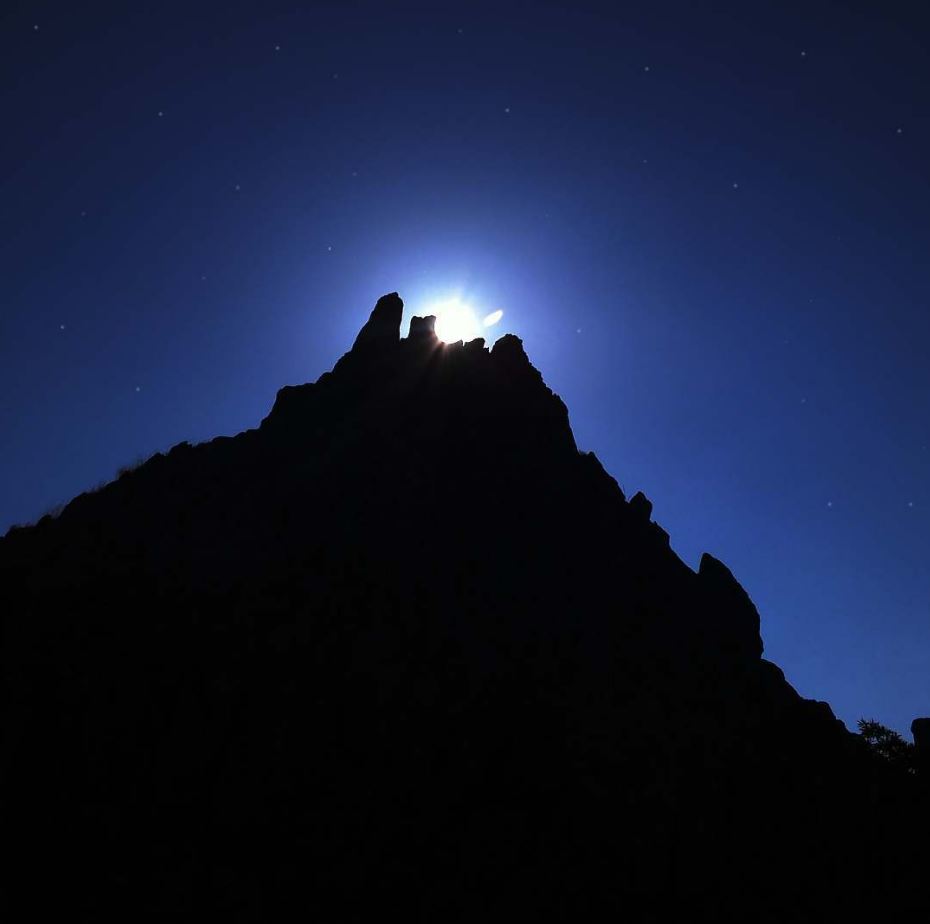
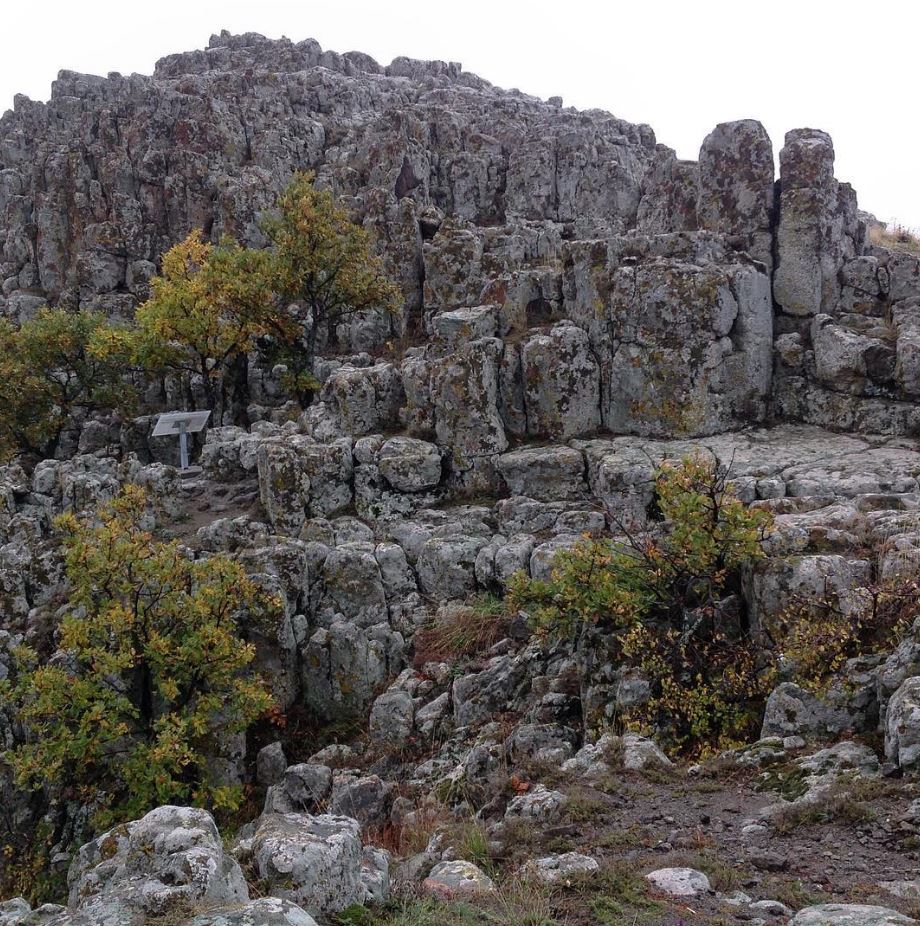
Kokino is an important ancient archaeological site, a prehistorical sanctuary and a megalithic observatory in the northeastern Republic of Macedonia, about 35 km from the town of Kumanovo, near the villages of Staro Nagoricane and Kokino. Kokino was discovered in 2001 by archaeologist Jovica Stankovski and was named by the nearby village of Kokino. Kokino site is situated 1030 m above sea level on the Tatićev Kamen Summit andesite rocks of an unusual shape and covers an area of a 100-meter radius. Historical and archaeological data of the River Pchinja valley as a natural corridor located in the central part of the Balkan Peninsula are recording the great importance of the river valley in the times of constant movement of the people as well as war expeditions that were passing in the north-south direction.

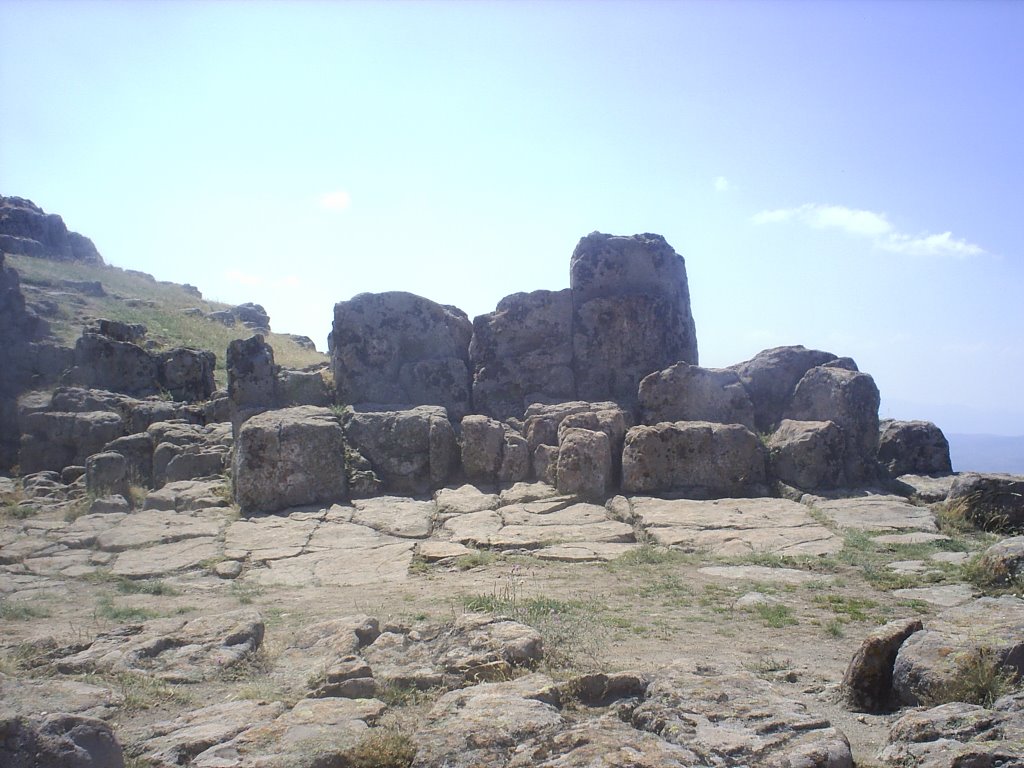
The Kokino site is more than 3800 years old. Kokino sanctuary – megalithic observatory consists of two parts. The oldest archaeological finds from Kokino site date from the Iron Period, around the 7th century BC. Finds from the Middle Bronze Age are the most numerous /mainly ceramic vessels, stone-mills and a few molds/. An agglomeration from the Iron Age has also been discovered at the Kokino sanctuary. Several stone seats (thrones) are dominant on the Kokino site and they are pointing towards the east horizon. They include special stone markers used to track the movement of the Sun and Moon on the eastern horizon. It was discovered that the Kokino site, in the course of the whole second millennium B.C. was used both as an Observatory and the sanctuary, which indicates a high level of cultural progress and social organization of inhabitants who used the observatory. Analysis showed that days when special rituals were held, especially those of the harvest were marked on a most appropriate way. The end of July is time when the harvest is completed, thus this ritual was linked to the glorification of this activity. According to the believes of the people of that time, in the moment when the tribe leader was enlightened ritually he unified with the God Sun and that was a assurance that next year would bring rich harvest, good and peaceful life. In the course of one calendar year, Sun and the Full Moon rise in different places on horizon, also determining the so called extreme rise positions on the horizon. This mean that Sun in winter when the day is the shortest or in the day of the winter solstice /22nd of December/ rises in it’s the southernmost position on the horizon. Then, day by day it moves towards the north and on the day of vernal equinox / 21st of March/ Sun rises on east. Sun continues to move toward the north, the length of the day increases and in the day of summer solstice /21st of June/ Sun reaches its northernmost point on the horizon. After that Sun returns back and in a day of the autumn equinox /23rd of September/ again it will rise on east, and on 22nd of December it will complete the cycle rising in the winter solstice point. Evidence for this can be found in huge number of archaeological findings of terracotta, especially large number of manual mils for grain.


A Kokino culture may have been found, after a network of 10 temples were discovered in the mountain peaks of the Kumanovo-Kratovo-Zletovo volcanic region, dating back to the 20th-18th century BC. Stone drawings have also been discovered at the Kokino site, especially those of the eagle (associated with storms), and turtles (symbol of country). At least ten figurine objects of humans and animals have been discovered. If Kokino is identified as an ancient civilization, it would be the oldest known in the Balkans. The Kokino prehistorical sanctuary – site – megalithic observatory was recognized by the United States Space Agency (NASA) as a significant heritage site of this type in its “Timeless knowledge” project in 2005. It listed Kokino side by side with ancient observatories as Stonehenge in Great Britain, Abu Simbel in Egypt and Angkor Wat in Cambodia. Kokino site – megalithic observatory has been nominated to be included on UNESCO World Heritage list.


MAKING MONEY ONLINE WAS NEVER SO EASY !!!