This important Roman settlement in the Pleven District, once part of the Roman province of Moesia Inferior, was built near the confluence of the rivers Iskar and Danube, not far from an old Thracian village. Today, the Iskar is 300 metres away from the archaeological site, its confluence with the Danube 5 kilometres further due to the boggy ground that had caused the Danube to change its direction in recent centuries.

The first buildings were erected during the campaign of Emperor Trajan (106–109 AD), on the ruins of the former permanent camp of the Fifth Macedonian Legion (10 AD). Outside the ruins of the Roman city walls, there are still visible remains of the defence wall of the legion’s camp, made of soil and stone (71–101 AD). After 271 AD, the legion returned to this place and built a second fortified city system (Oescus II).

In 167 AD, Oescus upgraded to a colonial city and got a new name, Colonia Ulpia Oescensium (“Ulpia” after Trajan’s middle name, Ulpius). Its citizens were mostly retired legionnaires. There were 150 Roman colonial cities, but this one was special because it was granted all Roman rights. It protected the Danube Limes road and was an important military road to the modern-day Plovdiv (Hellenic Philippopolis, Latin Trimontium) because it passed by the road station and, later, the mighty Storgosia fortress (in today’s Pleven).


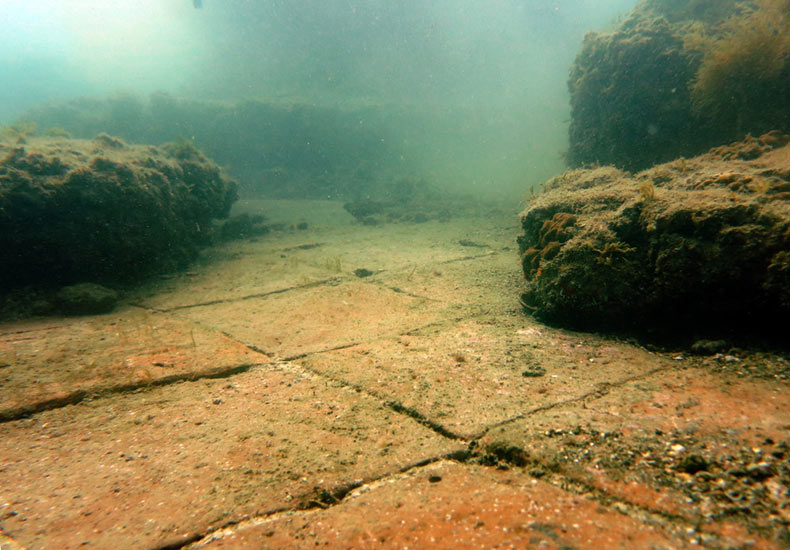
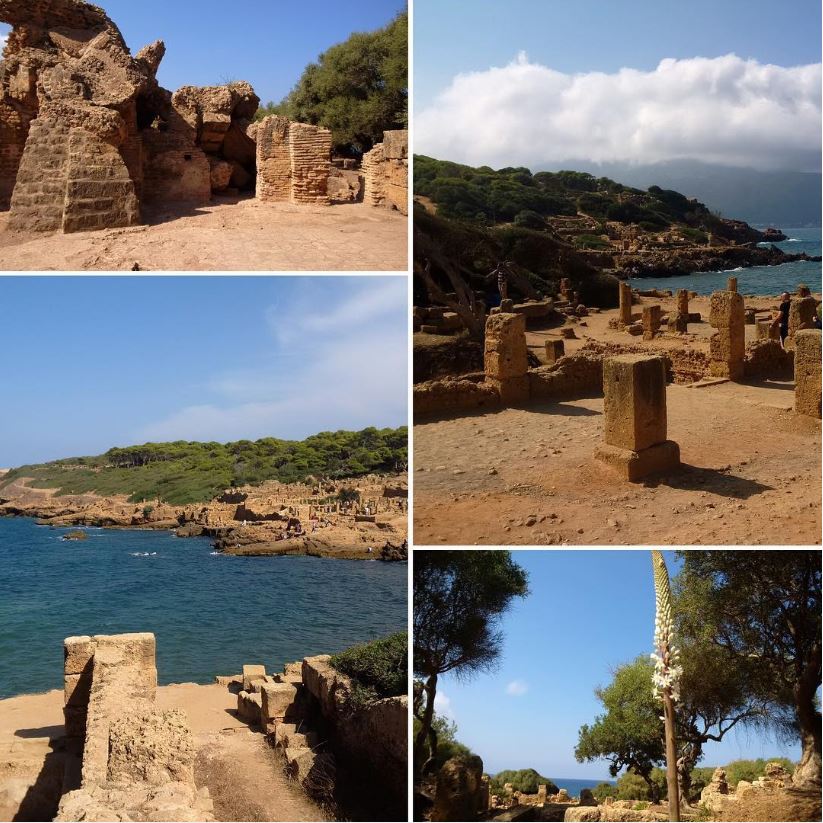
Still visible today, the majestic ruins of the city that covered 280,000 m² indicate the wealth of the Antonine and Severan dynasties. Near the entrance area, one can admire administrative buildings and a perfectly reconstructed Roman well in front of a big complex of public baths. Archaeological excavations started in 1904–1905. Later campaigns identified three public baths (thermae) and brought to daylight a perfectly preserved road from bath I to the remarkable Temple of Fortuna. Along the road there used to be shops until the 6th century.


The Temple of Fortuna, built in 190–191 AD, was dedicated to the protector of the city, the Goddess of Fortuna. Her statue is now exhibited in the National Archaeological Museum in Sofia. Just across the road, the famous mosaic The Achaeans (3rd century AD) was discovered in 1948. It is now exhibited in the Regional Historical Museum in Pleven, with other artefacts from Oescus and Storgosia.


The forum is dominated by the Temple of Capitoline Triad (Jupiter, Juno and Minerva) and a basilica. Further on, the public buildings of Oescus II were built. This area will be the focus of the 2013–2020 excavation campaign. The plan is also to fully reconstruct the buildings of Oescus I to give visitors a complete impression of this ancient Roman commercial, cultural and military centre. On 5 July 328 AD, Emperor Constantine I personally opened Constantines’s Bridge, the biggest and most famous stone bridge on the Danube. Today, its ruins can be seen only on the northern bank of the Danube, in Celei, once Roman fortress Sucidava, in Romania.


The bridge was in use only for a short period and then dismantled before the invasions of the Goths in 376–378 AD. In 411 AD, the Huns destroyed Oescus. Emperor Justinian I tried to re-establish Oescus as the stronghold of the Danube defence system, but all the efforts were stopped in late 585 and early 586 AD by the Avars. Another attempt at settling here was a Bulgarian village, built on the Roman ruins (10th–14th century), before Oescus finally vanished and became history.